Many women after 40 begin to notice subtle changes in their body – a feeling of dryness, increased sensitivity or discomfort that is often not talked about out loud. This is no coincidence. Most often it is linked to the natural hormonal changes that take place during perimenopause and menopause.
In this article we look at why intimate discomfort appears, how the body changes after 40 and which solutions can help support your wellbeing and intimate comfort.
What happens in the body after 40?
As perimenopause approaches – usually between the ages of 40 and 50 – the ovaries begin to produce less oestrogen. These hormones are important not only for the reproductive system but also for a woman’s general wellbeing.
Oestrogens directly affect:
- the hydration of mucous membranes and the renewal of their cells;
- the production of collagen and elastin;
- local circulation and the nourishment of tissues;
- the natural bacterial microflora that helps protect the mucous membrane from irritation.
In medicine these changes are often referred to as genitourinary syndrome of menopause (GSM). Studies show that around 50–70% of women experience various symptoms during perimenopause and menopause.
The mucous membrane – more than just moisture
A healthy mucous membrane is an active protective system. It maintains the right pH balance, produces natural mucus and contributes to comfort both day to day and during intimacy.
As oestrogen levels fall, the cells of the mucous membrane renew more slowly and the tissues become thinner and more sensitive. This process is called vaginal atrophy.
The most common symptoms are:
- a feeling of dryness;
- tingling or sensitivity;
- discomfort during intimacy;
- reduced comfort in everyday activities;
- emotional discomfort and reduced self-confidence.
It is important to know that these symptoms are neither rare nor something you simply have to “put up with”. With the right self-care, how you feel can improve considerably.
Read more about hormonal changes:
Why does metabolism slow down after 40 →
Why do the symptoms start even before menopause?
Perimenopause can last from 4 to 10 years before your last period. During this time hormone levels fluctuate unevenly, so the symptoms may become stronger and then weaker again.
The following often appear alongside them:
- sleep problems;
- fatigue;
- emotional ups and downs;
- reduced energy;
- dryness of the skin and mucous membranes.
These changes are interconnected, because they are driven by the same hormonal background.
Why are external products alone often not enough?
Lubricants and moisturisers can bring quick relief, but they often work only on the surface.
Much as in skincare, the long-term condition of tissues depends not only on external care but also on the internal state of the body: hydration, diet, hormonal balance and nutrients.
Some active ingredients are often used in formulas intended to support women’s wellbeing after 40:
- Slippery elm (Ulmus rubra) – traditionally valued for its mucous-membrane-supporting properties;
- Fermented ginseng – an adaptogenic plant that helps the body adjust to stress;
- Maca (Lepidium meyenii) – associated with supporting energy and general wellbeing;
- Hyaluronic acid – helps maintain the moisture balance in tissues;
- Biotin – important for the condition of the skin and mucous membranes.
Find out more:
What are fermented plant extracts →
How can you support intimate comfort after 40?
A few important everyday habits can help you feel well:
- Drink enough water – hydration matters for all tissues.
- Avoid harsh hygiene products and heavily perfumed products.
- Stay physically active – good circulation matters for nourishing the tissues.
- Pay attention to rest and reducing stress.
- Choose a balanced diet and good-quality supplements.
Frequently asked questions
Does intimate dryness affect every woman?
Not every woman to the same degree, but it is one of the most common symptoms of perimenopause. For some women the symptoms are very mild, for others they affect everyday comfort more.
Do I need to see a doctor?
If the symptoms are severe, or if burning, pain or unusual discharge appear, we recommend consulting a doctor or gynaecologist.
Can comfort be supported without hormone therapy?
Yes. Some women choose non-hormonal solutions: moisturisers, lifestyle changes or specialised food supplements.
When can changes be noticed?
This depends on the individual state of the body. With consistent self-care, positive changes are usually noticed after a few weeks.
Find more answers in our FAQ section →
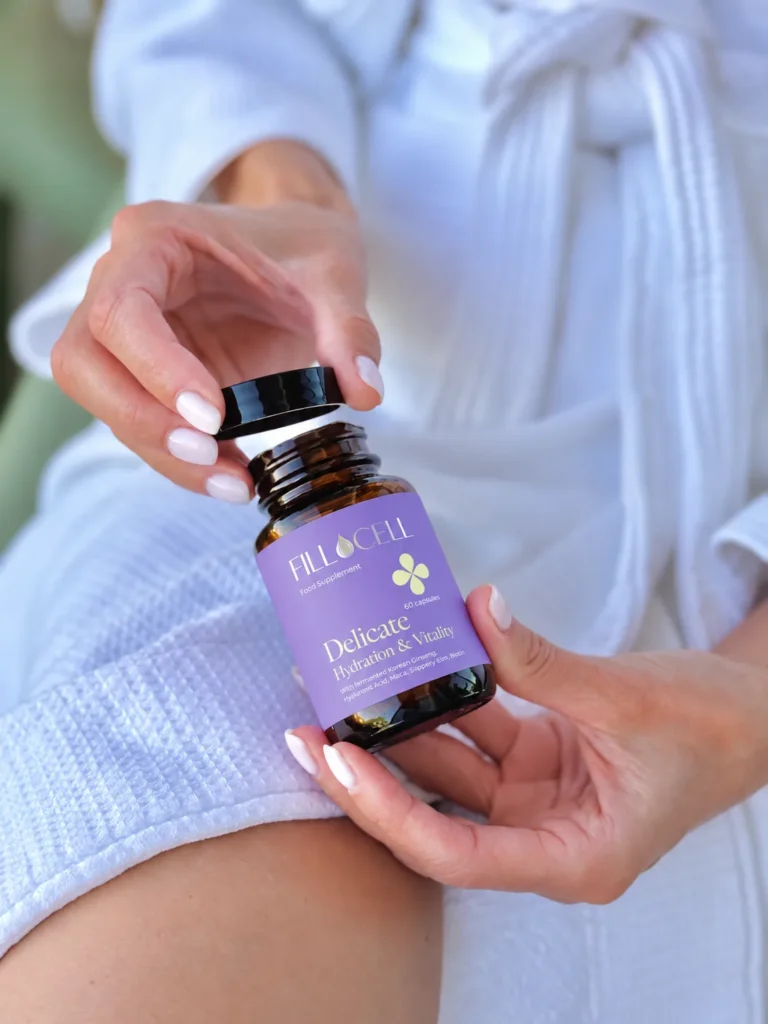
FILLaCELL Delicate Hydration & Vitality
FILLaCELL Delicate Hydration & Vitality was created for women who want to support their intimate wellbeing and comfort during perimenopause and menopause.
The formula combines:
- slippery elm;
- fermented ginseng;
- hyaluronic acid;
- maca;
- biotin.
Every ingredient was chosen with the changes in a woman’s body after 40 in mind.
It is everyday support for a woman who wants to feel comfortable, confident and to care for her body naturally.
Intimate changes after 40 are a natural part of a woman’s life. But that does not mean you have to accept discomfort.
By understanding the changes in their bodies and choosing the right care, women can maintain comfort, wellbeing and self-confidence at every stage of life.